The Most Important Part of Your Phoenix Roof That You Can’t See
When you stand outside and look at a roof in Phoenix, your eyes go straight to the tiles, the shingles, or maybe the color. But here’s the truth that most homeowners never hear: the most important part of your roof isn’t the material you see. It’s the layer underneath. Roof underlayment is the real hero, the hidden protector that separates a standard job from a roof that can endure Arizona’s punishing desert climate for decades.
What Roof Underlayment Really Is
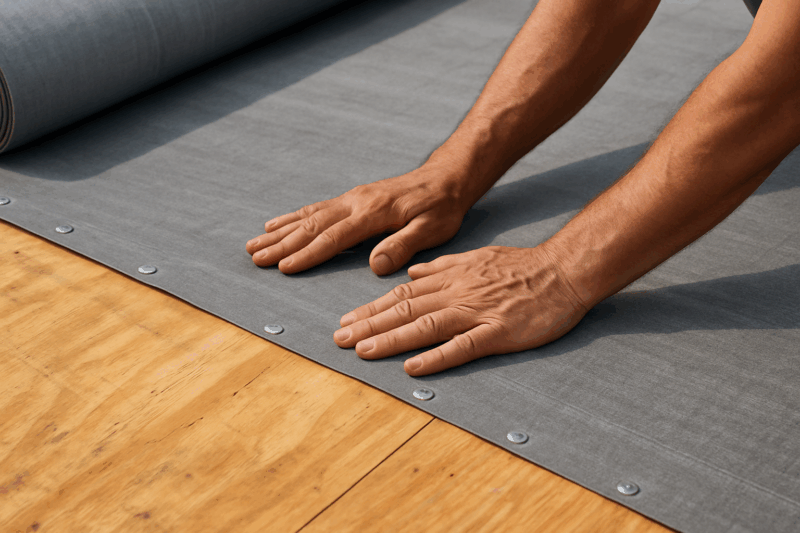
Think of your roof as a system, not just a surface. The underlayment is a continuous sheet installed directly over the wooden roof deck before the visible roofing material is laid down. Its primary purpose is waterproofing. If tiles shift or a shingle cracks, it’s the underlayment that stands guard, keeping water from soaking into the structure below. It’s the quiet barrier that prevents minor surface flaws from becoming catastrophic leaks.
In many ways, the roof you admire from the street is just a shield against the sun and wind. The real waterproof roof is the underlayment.
Why Underlayment Matters So Much in Phoenix
Phoenix is no ordinary place to build a roof. Here, the desert climate turns every weakness into a failure. Underlayment is critical in three specific ways.
First, it’s the last line of defense during monsoon rains. We can go months without a cloud, but when July rolls around and the skies open, water comes down in sheets. Tiles are not waterproof, and wind-driven rain slips between them easily. Without a strong, intact underlayment, that water finds its way into your home.
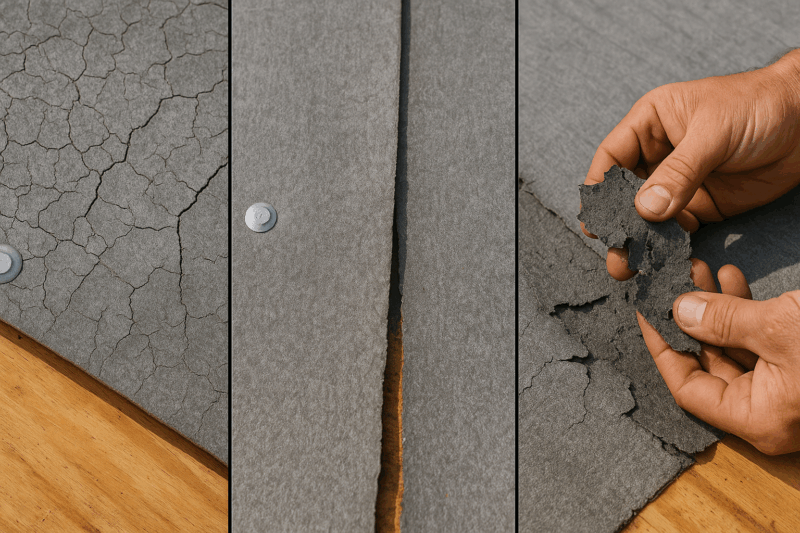
Second, it has to endure relentless ultraviolet radiation. Our sun doesn’t just heat the roof; it cooks it. Traditional felt paper dries, cracks, and crumbles in this environment. A failed underlayment under tile might not be noticed until years later when leaks appear, and by then the damage can be severe.
Finally, the temperature swings stress every component. Roof decks expand during 115-degree days and contract under cool desert nights. Over time, that movement breaks down weaker materials. Quality underlayment is engineered to flex and hold together where older materials fail.
This is why in Phoenix, roof underlayment isn’t a detail. It’s the very backbone of a reliable roof system.
Types of Roof Underlayment in Phoenix
When we talk about what’s under a tile roof in Phoenix, two main underlayment types come up: traditional asphalt-saturated felt and modern synthetic sheets.
Asphalt-Saturated Felt has been used for decades. It’s affordable and familiar to many installers. But in our desert, it’s fragile. Felt can dry out, tear easily, and degrade in the heat long before the tiles above it wear out. On paper it can last 15 to 20 years, but in Phoenix that lifespan is often shorter.
Synthetic Underlayment is the modern standard and what any craftsman who cares about durability will recommend today. These engineered materials resist tearing, hold up to UV exposure, and remain stable under high heat. They can last 25 to 30 years or more, especially under a properly installed tile system. They’re also safer to walk on during installation and repairs, reducing the risk of damage.
When you compare the two side by side, the difference is clear. A felt underlayment might give you a roof that looks fine at first but fails silently underneath. A synthetic underlayment, by contrast, is built to match the longevity of your tile roof and protect your investment over the long term.
How Underlayment Fails
The tricky part is that underlayment often fails in silence. Tiles can look perfect while the barrier below is brittle and cracked. Homeowners usually don’t discover the problem until a ceiling stain appears or water drips inside during a storm.
Roofers know the signs to look for. When we lift a tile during inspection, we can see if the underlayment has dried out, shrunk back from the seams, or literally disintegrated in our hands. Once that happens, repairs are no longer a patch job. A full replacement becomes the only option.
That’s why proactive inspection is so valuable in Phoenix. If your home is over 20 years old and the roof hasn’t been redone, chances are the underlayment is at the end of its service life even if you haven’t seen leaks yet.
Codes, Craft, and Quality
Local building codes in Arizona require underlayment on all roofs, but codes are just the starting line. Meeting code doesn’t guarantee a roof that lasts through decades of desert extremes. Craftsmanship makes the difference.
A superior installation uses underlayment that meets ASTM and UL standards for durability and fire resistance, applied with proper overlaps, fasteners, and attention to detail. Every joint, valley, and penetration must be sealed like the roof depends on it—because it does. That’s where an experienced roofing crew separates themselves from the crowd.
The Bottom Line for Phoenix Homeowners
If you’re researching a roof replacement, remember this: the visible roofing is only half the story. The most important part of your Phoenix roof is the underlayment you can’t see. It’s the true waterproofing layer, the shield that keeps out monsoon rains, withstands brutal desert sun, and ensures your roof performs for decades.
At Strad Roofing, we’ve built our reputation on doing things the right way, from the deck up. We don’t cut corners on the parts of the roof that most people will never see, because that’s where true quality lives.
If you’re a homeowner who values durability, craftsmanship, and peace of mind, we invite you to schedule a free consultation with our team. Let us show you how a roof should really be built, starting with the underlayment that protects everything beneath it.