TPO, Foam, or Silicone? Choosing the Right Commercial Flat Roof for Phoenix Heat and Monsoon Season
Phoenix punishes roofs. If you manage a commercial flat roof in Phoenix, you already know the mix of extreme heat, intense UV, sudden monsoon downpours, and dust can age a system fast. The right choice is about how the roof handles UV, thermal movement, wind-driven rain, and drainage, and whether it fits your operations.
Phoenix Heat and Monsoon Pressures
Summer highs routinely exceed 110°F, and the UV index often reaches very high to extreme. That accelerates surface aging and stresses seams and flashings through daily expansion and contraction. From mid-June to late September, monsoon cells bring short, heavy rain, microburst winds, and dust that clogs drains. Flat roofs face ponding at low spots and uplift at perimeters if attachment is weak. Any imperfect seam or penetration is the first failure point when storms arrive.
TPO vs foam vs silicone: what works here

TPO single-ply
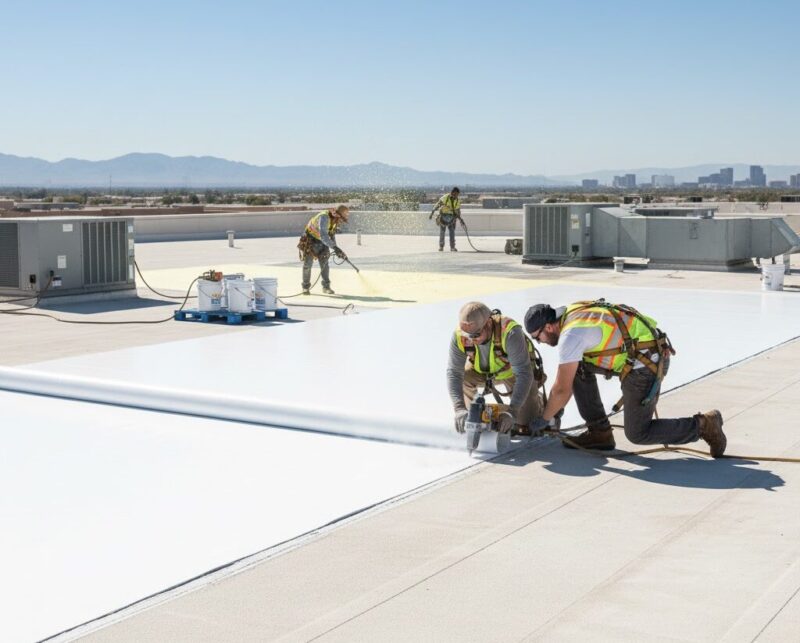
TPO is a white, heat-welded membrane that starts highly reflective and can meet longer warranty targets at higher thickness. It is efficient on large, open roofs and reduces interior loads through reflectivity. Seams are strong at install yet remain linear risk points after many seasons of UV and thermal cycling. TPO dislikes long-term ponding, and complex roofs with many curbs increase detailing time and future leak risk. A clean, dry substrate and proper cover board are critical.
SPF spray foam
SPF creates a seamless, fully adhered surface and adds insulation near R-6 per inch. Crews can build a slope while spraying, which solves chronic birdbaths without tapered boards. The monolithic surface performs well around dense rooftop equipment and in wind. The foam must be protected with a UV-resistant topcoat and will need recoating on a cadence to maintain performance. Odor control, overspray management, and experienced applicators are essential. When owners search for spray foam roof Phoenix, this is the system they usually mean.
Silicone roof coatings
A silicone restoration is a fluid-applied topcoat over a sound existing roof. It resists UV and ponding water, which fits Phoenix storm patterns. It does not add structure or meaningful insulation and relies on the health of the roof below. Prep and moisture checks matter. Dirt can dull reflectivity over time, so periodic cleaning helps. For owners pricing silicone roof coating in Phoenix, coatings often deliver a decade or more of added life with minimal disruption.
Decision criteria for commercial flat roof Phoenix
Start with what you have. If the roof is saturated or already has two layers, the code pushes you to tear off before any new membrane goes on. If it is mostly dry and structurally sound, SPF or a silicone restoration can be overlaid after repairs. Study drainage and slope. If water sits after storms, SPF’s built-in slope is a strong fix.
Count penetrations and equipment. Many curbs and pipes favor SPF’s seamless flashing. Consider building height and exposure. Uplift ratings and perimeter detailing matter more on taller boxes and corners. Then factor in business constraints. TPO brings mechanical fastening noise and possible adhesive odors, foam brings chemical odor and overspray controls, and coatings are usually the least disruptive.
Align warranty goals and maintenance comfort. Longer single-term warranties drive thicker TPO or heavier coating mils. Foam and silicone excel when you accept a planned recoating cycle and routine inspections. Cost, energy impact, and warranty specifics require an on-roof inspection and written scope.
Costs, energy, and warranty reality
In typical Phoenix bidding, TPO and SPF often land in a similar band per square foot, while a full silicone restoration is usually lower. Exact pricing swings with tear off, insulation thickness, height and access, and detailing density.
Reflective surfaces can cut cooling loads, and SPF’s continuous insulation can amplify those savings, yet results depend on your building, occupancy, and HVAC. Warranty terms vary by thickness, attachment, and manufacturer rules. Accurate numbers require an on-roof inspection and moisture survey where needed.
Maintenance that fits the monsoon
Plan two focused checkups each year. In late spring, clear every drain and scupper, remove dust and debris, and check seams, flashings, and perimeters for lifting or cracks. Fix ponding indicators and thin coating areas before storms.
After the season, walk the roof again, remove wind-blown debris, inspect for punctures or coating scuffs, and verify that edges and penetrations held up. Foam and silicone systems should be recoated at their expected interval to keep UV off the foam and maintain mil thickness. Keep simple records with photos. Many warranties require regular inspections and timely repairs.
Where each system fits best
Large warehouses with simple roofs and a need for high reflectivity often do well with TPO over a dry substrate and the right insulation package. Office and medical buildings with many units and penetrations lean toward SPF because it seals complex details and adds value while avoiding a full tear-off. Retail and light commercial roofs that are aged but mostly dry are strong candidates for silicone restoration that seals seams, tolerates minor ponding, and lets tenants stay open during the work.
Ready to choose your commercial flat roof in Phoenix
Your roof should match your climate, your building, and your schedule. Whether you prefer a reflective TPO, an insulated spray foam roof Phoenix, or a targeted silicone restoration, the next step is a professional look on the deck. Schedule a commercial roof inspection and estimate with Strad Roofing. Get fast on-site evaluations, clear side-by-side options, and warranty-backed workmanship built for Phoenix heat and monsoon season.