How to Prevent Pigeon Nesting Under Your Roof Tiles
There are some innocent pigeons on the roof. But as soon as they get under your tiles and commence to nest, the damage soon follows. They corrupt your tiles with their excreements, block your gutters with nests, and infect people with their dust. To compound matters, state and local regulations might limit your choices after a nest has been activated. This guide will show how to keep pigeons away prior to settlement, what actually works as well as what makes your money run down the drain.
Why Pigeons Target Your Roof Tiles
Pigeons are descendants of rock doves on the cliffs. Your roof is like the cliff face that they developed to love. With profiled clay and concrete tiles, small tunnels are created between the underside of the tiles and the roof underlayment. These burrows are used to stay warm, to shelter, and to avoid ground predators. Add a solar panel array and you will have made a pigeon paradise.
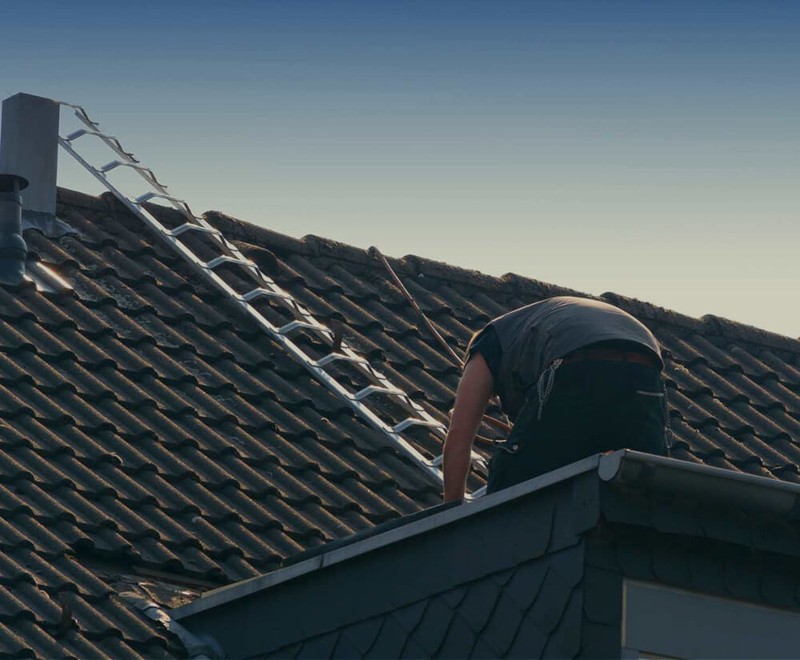
The harm is rapidly amassed. Pigeon droppings are very acidic and they corrode tile glaze, paint and metal flashings. The nest rubbish covers up the gutters and collects the rain water, which drips under the tiles that have been shifted. Industry statistics show that one pigeon can produce up to 25 pounds of droppings in a year. Divide that by a breeding-pair of five broods, and your roof is burdened no light matter. As such, prevention is less expensive than cure.
Understanding the Risks and Rules First
Before you grab a ladder, know two things: the health risks involved and the legal rules that apply. Both determine your next safe and lawful action.
Health Hazards From Pigeon Droppings
Pigeon droppings are dried and when you solve them, the particles become airborne. They are capable of carrying Cryptococcus, Histoplasma and Chlamydia psittaci. These pathogens are associated with cryptococcosis, histoplasmosis, and psittacosis by the CDC. Majority of healthy people shake off exposures. But children, the elderly and people with a weak immune system are at actual risk. It is therefore really unsafe to dry sweep an infected attic without protective materials.
US Law on Removing Pigeon Nests
American homeowners have a reason to rejoice: feral pigeons, as well as European starlings or house sparrows, are not safeguarded by the federal Migratory Bird Treaty Act. The birds on your premises can be removed legally and the nests of the birds controlled. Nevertheless, there are restrictions imposed by state and city regulations. A few municipalities are humane only, and some are prohibitive of poisons. Never do anything without consulting your local ordinance. Hence, the time and the process are equally important as the technique.
Install Bird Stop or Eaves Closure
A bird stop (or eaves closure) is a stiff-toothed flexible strip. It is placed between your tile and your fascia board. The teeth seal the space between the waves in profiled tiles and prevent the pigeons to squeeze into. Plastic versions are inexpensive, yet they distort in a couple of years. Galvanized steel bird stops are durable and they prevent the air to stagnate in the roof space. In addition, Arizona, California, and Florida have since made it mandatory by their building codes that bird stop is installed on newly installed tile roofs.
Pigeon-Proof Your Solar Panels
The area beneath solar panels is now the best nesting site in US suburbs. Bird attaches to the edge of panel without drilling. The no-drill point is significant because in the majority of panel warranties, drilling annuls the warranties. A good mesh retrofit costs about $400 to $1,500, depending on the size of the array and accessibility of the roof. Installation of mesh is much cheaper when installed during the installation of the solar than when it is installed after the solar has been installed. This is also being provided by most reputable solar installers as an add-on service.
Use Bird Spikes Strategically
Bird spikes are used on ridges, chimney tops and flat ledges in which pigeons want to perch. They are not employed in between tiles or on panels of the sun. Put them into order, and pull out all the leaves and old nest stuff. Otherwise, pigeons will nest on the garbage. Humane World for Animals considers spikes to be humane and effective with pigeons. Nevertheless, even tiny birds such as house sparrows can squeeze between the pins.
Remove Food and Water Sources
Pigeons follow food. They are attracted to backyard bird feeders, uncovered trash cans, outside pet food, and decorative fountains. Less food and your roof is not so attractive. To decrease seed spillage when feeding song birds, a tube feeder with small openings will be used. Similarly, covering compost with containers and collection of fallen fruits denies easy meals. This implies that any change of habitat is going to enhance the effect of any physical barrier that you introduce.
Pigeon Control Myths That Waste Your Money
Plastic owls and fake hawks are employed to work one week after which pigeons reject them. There is very little effectiveness in ultrasonic repellers since pigeons have the same range of hearing as humans. Chili powder, cinnamon and reflective CDs fade or dissipate in days. There is no use in killing the pigeons on your roof. Ecologists refer to this as the vacuum effect, and only after a few weeks do the empty spaces become filled by new birds. But finally it is only in the case of exclusion and removal of attractants that there are long-term effects.
When to Hire a Professional Roofer
DIY on a one-story house spike strip. Top that, you need a licensed roofer or a pest controller who is a member of the NPMA. They bring ladders, safety equipment, insurance and know how to build the products in the appropriate way. A good professional inspects every tile, closes all the seals and records the job. Moreover, they are aware of retrofitting bird stop without breaking your current tiles.
Protect Your Roof With Stradling Roofing
At Stradling Roofing, we stop pigeons infestations before they can ruin your house.
Call Stradling Roofing to have a free inspection and an upfront quote. Cover your roof before you will have to spend a lot of money to repair it.